Working with the right international freight forwarder USA export is not about finding the lowest rate. It is about finding a company that owns the full process — from vendor pickup through documentation to vessel departure — without leaving gaps that cost you time and money. These seven questions cut through the sales pitch and show you what a forwarder actually does when cargo is moving. An effective international freight forwarder USA export must understand your needs and provide tailored solutions that streamline your shipment process.
Table of Contents
What an International Freight Forwarder Does for USA Export Shipments
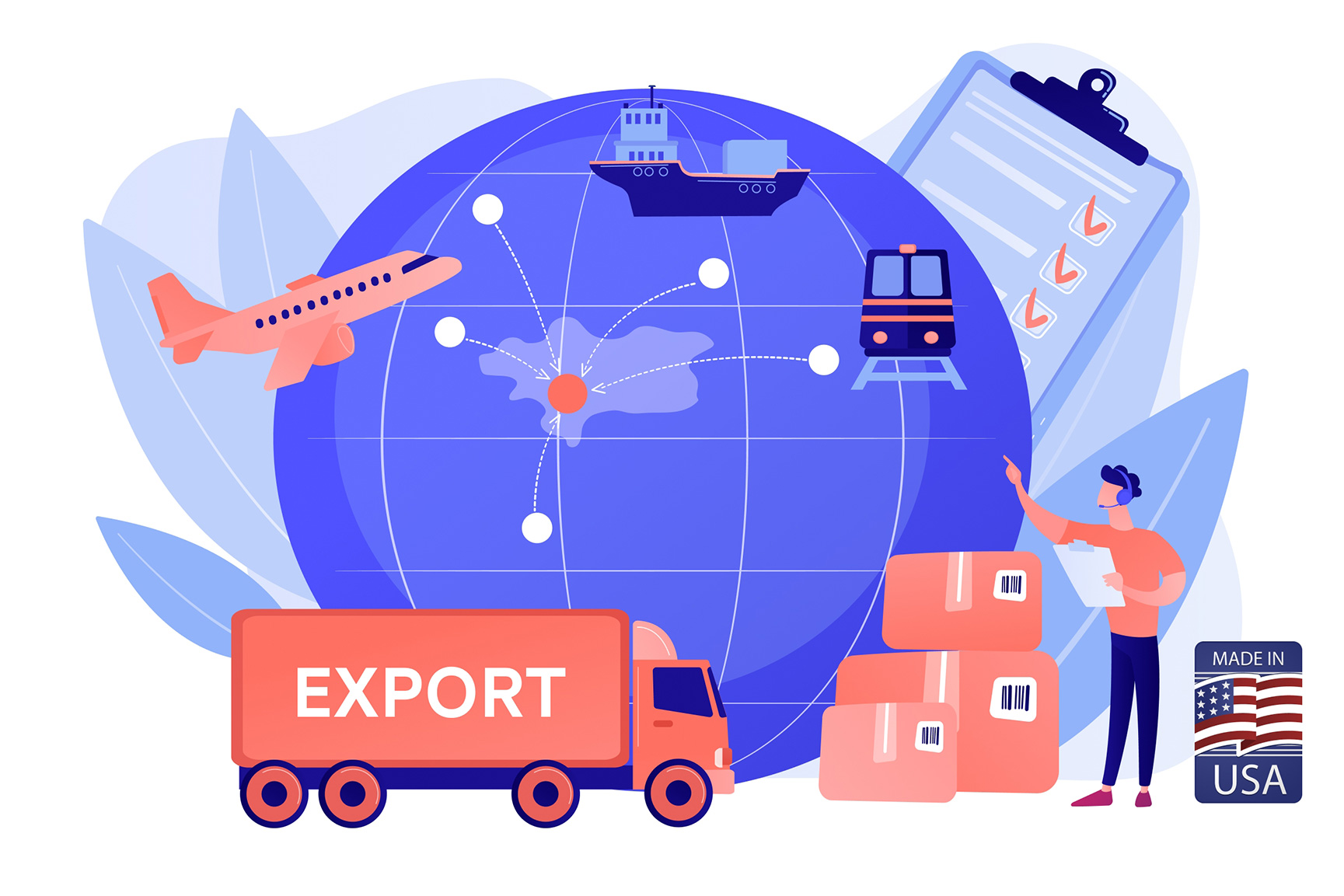
An international freight forwarder for USA export coordinates the movement of commercial cargo from a US origin to an international destination. The scope of work includes booking ocean or air freight, preparing export documents, filing Electronic Export Information (EEI) through the Automated Export System (AES), managing supplier pickups, and tracking the shipment through departure.
The work starts before the container reaches the port. Cargo readiness, vendor scheduling, packing compliance, and document accuracy all happen upstream of loading. A forwarder that only appears at the booking stage is a rate provider — not an operational partner.
According to the US Census Bureau, the United States exported $278.5 billion worth of goods in March 2025 alone. That volume means the gap between forwarders — in accountability, process, and execution — has a direct dollar value on every shipment.
Q1: Do You Handle USA Export Only, or Is It a Side Service?
Many international freight forwarding companies run import and export as parallel operations. For US-origin shipments, that often means your export account is managed by a team that spends most of its time on inbound cargo. Export gets the remaining attention.
A forwarder whose entire operation is built around USA export — outbound cargo, export documentation, AES compliance, departure scheduling — operates with a different level of focus. When something goes wrong on a Friday afternoon, the team that picks up the phone has handled that problem before.
Ask directly: what share of your volume is USA export versus import? The answer tells you where their process is sharpest.
Q2: Who Prepares the Export Documentation — and Who Is Accountable?
Documentation errors are among the most common causes of shipment holds, delays, and fines on USA export cargo. A single discrepancy between a commercial invoice and a packing list can trigger a US Customs and Border Protection review that adds days to the timeline — and storage fees that run from day one.
For USA export, the standard document set includes: commercial invoice, packing list, bill of lading or airway bill, AES/EEI filing, and depending on destination and cargo — certificates of origin, phytosanitary certificates, or export licenses. Every document must match. CBP and destination customs both check for discrepancies.
Ask who prepares each document, who reviews it before submission, and who is legally accountable if an AES filing contains an error. Under the Foreign Trade Regulations, filing errors carry penalties starting at $1,100 per violation. A forwarder that takes ownership of documentation is a different service level than one that files whatever the shipper sends.
Q3: Can You Coordinate Pickups From Multiple Suppliers?
Many commercial export shipments do not originate from a single location. A buyer in the Middle East or Africa might consolidate heavy machinery from Ohio, spare parts from a Texas distributor, and industrial tooling from a Pennsylvania manufacturer. Getting all three to the same port, on the same cutoff, loaded into the same container is a coordination problem — not a booking problem.
Most large international freight forwarding companies treat vendor coordination as outside their scope. The exporter is expected to deliver cargo to the port; the forwarder handles it from there. That gap creates missed cutoffs, partial shipments, and emergency air freight costs.
A forwarder that contacts suppliers directly, tracks readiness dates, and consolidates multi-origin cargo closes that gap. Ask whether vendor communication is included in the service or whether it falls to you.
Q4: Do You File AES In-House or Outsource It?
Every USA export shipment valued above $2,500 to most destinations — and all shipments requiring an export license — requires EEI filing through AES. The filing is a legal responsibility. Errors, late submissions, or missing filings carry penalties starting at $1,100 per violation under the Foreign Trade Regulations.
Some international freight forwarders file AES in-house. Others route it through a partner customs broker. Both structures can work, but the accountability differs. If your forwarder outsources AES filing, confirm how data is verified before submission and who catches errors before the deadline passes.
For ocean shipments, also verify that the forwarder holds an active FMC Ocean Transportation Intermediary (OTI) license. Current status is searchable at fmc.gov by company name — takes two minutes and is free.
Q5: How Do You Manage Demurrage and Detention Exposure?
Demurrage and detention fees accumulate when containers are not returned on time or cargo sits beyond the free days allocated by the terminal. At major US export ports — Los Angeles, Long Beach, New York, Houston — these fees typically run $150 to $300 per container per day. They start automatically when the deadline passes, regardless of reason.
The most common triggers on USA export shipments: documentation submitted late, cargo not ready by the booking cutoff, booking delays that push the shipment to the next available sailing. A forwarder that actively manages these variables tracks free day expiration, aligns document deadlines with vessel schedules, and flags readiness problems before charges begin.
Ask specifically: how do you track free days across active shipments? What happens when cargo is not ready by the cutoff? A forwarder with a real process answers that question specifically. One without a process leaves the exposure on you.
Q6: Have You Moved This Type of Cargo Before?
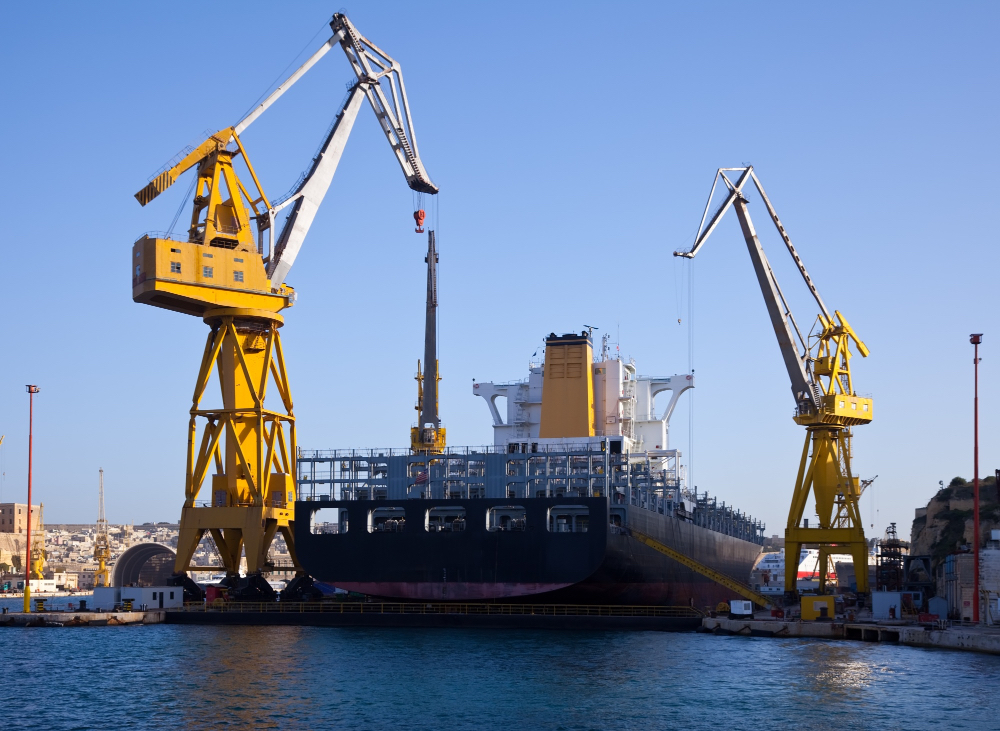
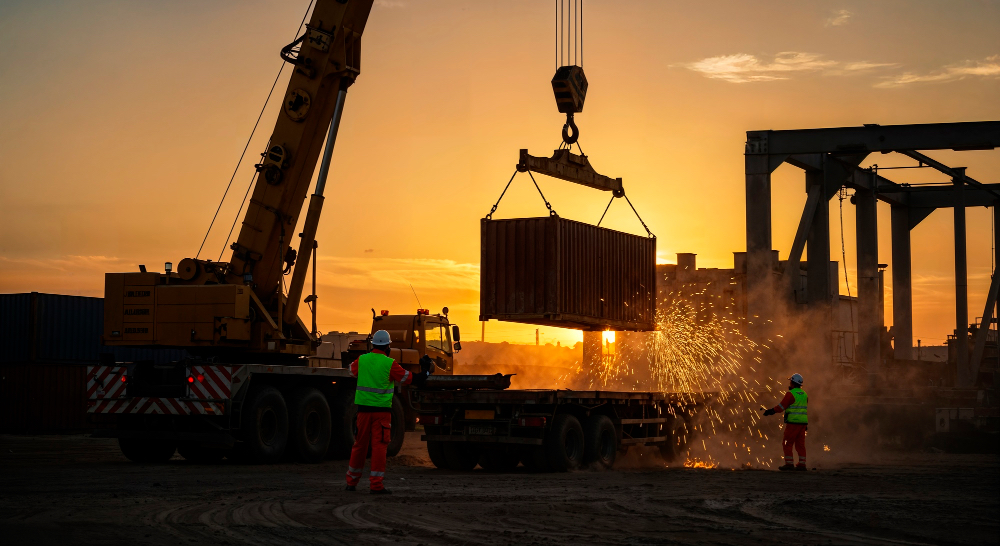
Heavy equipment, oversized cargo, project cargo, and breakbulk shipments require a different process than standard FCL containers. Loading a 40-ton excavator onto a RoRo vessel or booking a flat rack for an OOG unit involves terminal coordination, specialized rigging, lashing certificates, and weight distribution planning that a standard ocean forwarder may not handle in practice.
For any non-standard cargo, ask for specific examples: what cargo, what route, what vessel type. Ask about packing and bracing specifications and whether they coordinate rigging directly or subcontract it. The same level of specificity applies to hazmat, temperature-controlled cargo, and products requiring export licenses — each has its own compliance layer, and a forwarder experienced in that category asks the right questions from the first call.
Q7: Who Is My Single Point of Contact When Something Goes Wrong?
When a shipment hits a problem — a CBP hold, a vessel delay, a documentation error — the question that matters is: who calls you, and what can they actually do?
At large international freight forwarding companies, a single shipment may pass through booking, documentation, compliance, and customer service as separate departments. When a problem crosses those lines, resolution requires internal coordination between teams with different priorities. The exporter waits.
A forwarder where one person manages the file, communicates with the carrier, coordinates with the terminal, and contacts the vendor directly — that structure shortens the resolution loop significantly. Ask: if there is a problem at 4pm on Friday, who do I call, and what authority do they have to fix it?
Red Flags Worth Noting Before You Sign
A few patterns in early conversations with any international freight forwarder for USA export are worth flagging:
- The quote arrives before the questions. A forwarder that sends a rate without asking about cargo type, readiness timeline, destination documentation requirements, or consolidation needs is quoting without the information required to execute. That rate will change, or critical details will be missing at departure.
- Vendor coordination is explicitly out of scope. If supplier pickup management falls entirely to you, you are absorbing the most common source of missed cutoffs and partial shipments on multi-origin export cargo.
- AES is handled by “our customs broker.” Not a dealbreaker — but confirm exactly how data is verified before the filing goes in, and who takes accountability if the EEI contains an error that triggers a penalty.
- No specific answer on demurrage tracking. If the forwarder cannot describe their process for managing free day expiration, that storage cost exposure lands on you by default.
People Also Ask
What does an international freight forwarder do for USA export?
An international freight forwarder for USA export manages the movement of commercial cargo from a US origin to an international destination. Core services include ocean or air freight booking, export documentation preparation, AES/EEI filing, supplier pickup coordination, and shipment tracking through vessel departure. The scope of service varies significantly between forwarders — some cover the full export process, others focus on booking and documentation only.
How do I verify an international freight forwarder’s FMC license?
Go to fmc.gov and search the OTI licensing database by company name. An active FMC Ocean Transportation Intermediary license is required for any forwarder arranging ocean freight from US ports. Verification is free and takes under two minutes. For air cargo, IATA cargo agent accreditation is the relevant credential, searchable through IATA’s Cargo Agent Search Tool.
What is AES filing and why does it matter for USA export shipments?
The Automated Export System (AES) is the US government’s electronic platform for filing Electronic Export Information on outbound shipments. Filing is required for most USA exports valued above $2,500. Under the Foreign Trade Regulations, errors, late filings, or missing filings carry penalties starting at $1,100 per violation. Your international freight forwarder should prepare and submit the EEI and take accountability for filing accuracy — not simply pass the data through without review.
What triggers demurrage and detention fees on USA export cargo?
Demurrage and detention fees accumulate when containers are not returned within free days or cargo cannot be loaded on schedule due to documentation issues, late cargo readiness, or booking delays. At major US ports, these fees run $150 to $300 per container per day and begin automatically when deadlines pass. A proactive international freight forwarder tracks free day expiration across active shipments and flags readiness problems before charges begin.
Is it better to use an export-specialist freight forwarder or a large global company?
For regular USA export volume or complex cargo types, an export-specialist international freight forwarder offers sharper process focus and more direct accountability. Large global forwarders split operational attention between import and export and typically treat vendor coordination as outside their scope. For heavy equipment, multi-supplier consolidation, or destinations with specific documentation requirements, a forwarder whose core business is USA export handles those situations as standard practice.
Ready to Move Cargo from the USA?
Falcon Cargo is an international freight forwarder for USA export – ocean and air freight, commercial cargo of any type, any destination. We manage the full export process: vendor coordination, documentation, AES filing, packing and bracing, routing, and departure from US and Canadian ports.
Website: https://falconcargo.net
Email: sales@falconcargo.net