Data center project cargo 2026 has become one of the fastest-growing segments in heavy lift and project logistics — and most companies building AI infrastructure are already feeling the pressure. More than half of US data centers planned for 2026 are expected to face delays, according to Bloomberg, and the primary bottleneck isn’t construction. It’s the inability to move critical power equipment — transformers, generators, substations, and cooling systems — fast enough to keep projects on schedule.
At Falcon Cargo, we handle commercial exports of heavy equipment and oversized cargo from the USA and Canada worldwide. The skills and process discipline we’ve built moving drilling rigs, industrial modules, and heavy machinery translate directly to moving power infrastructure for data center projects. This guide breaks down what’s actually driving the data center project cargo 2026 surge, the five logistics challenges that are causing the most delays, and what it takes to ship this equipment without losing your project timeline.
Table of Contents
1. Why Data Center Developments Are Driving Project Cargo 2026 Surge
The numbers behind data center project cargo 2026 are hard to ignore. Capital expenditure in data centers reached $770 billion in 2025, surpassing global upstream oil and gas investment for the first time, according to Rystad Energy. In 2026, that figure is expected to match combined spending across both the renewable energy and oil and gas sectors.
76 data center projectsare set to start in the US in the next six months, valued at over $88 billion — a 13% increase over all of 2025, according to Construct Connect.
This isn’t a short-term spike. Industry analysts tracking data center construction predictions for 2026 point to sustained growth well beyond this year — McKinsey estimates $7 trillion in global data center infrastructure investment by 2030, with over 40% of that spending in the United States. The Stargate Project alone — the joint venture between OpenAI, SoftBank, Oracle, and MGX — has committed $500 billion over four years to build AI infrastructure in the US.
For heavy lift and project cargo specialists, this represents a structural shift in demand comparable to the oil and gas boom of the early 2000s. Heavy Lift PFI reported in April 2026 that data centre construction is now actively reshaping global project cargo flows — and that the surge is creating real work for heavy lift specialists who understand power infrastructure logistics.
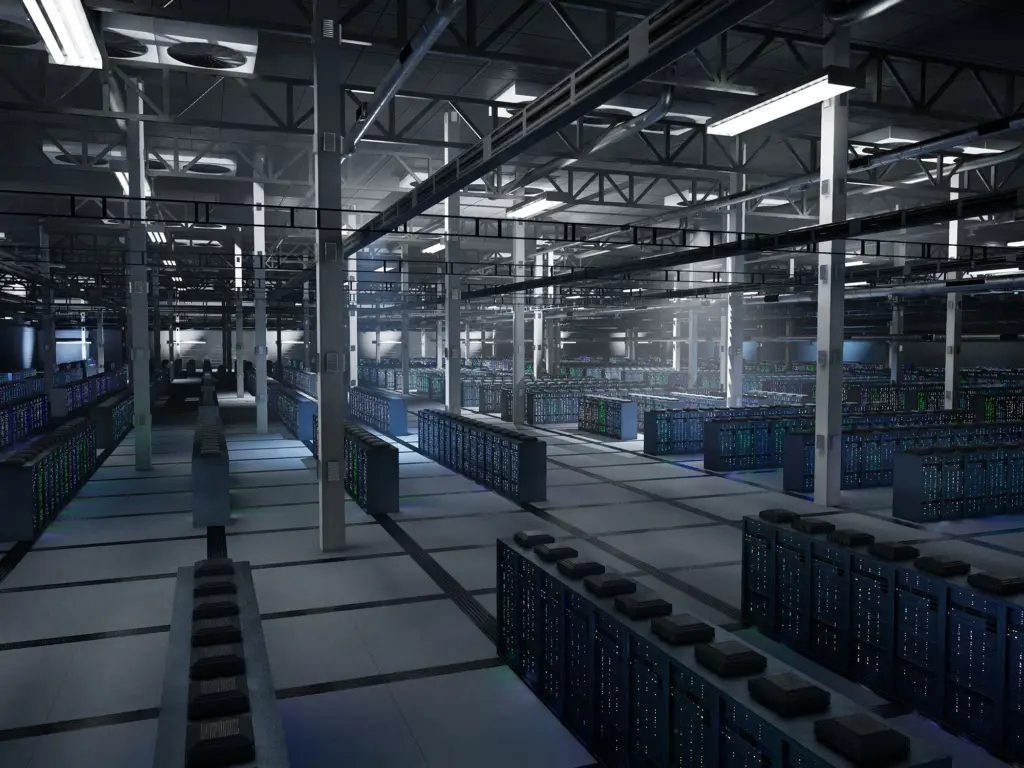
2. What American Data Center Projects Actually Need to Move
Not all data center cargo is servers and racks. The equipment driving the data center project cargo 2026 surge is heavy, oversized, and requires the same handling discipline as oilfield or industrial cargo.
The primary categories:
- Power transformers — often exceeding 100 tons, with long lead times from US and European manufacturers. These are the single biggest bottleneck in data center construction timelines.
- Generators and gas turbines — required for on-site power generation, especially where grid interconnection is delayed. Grid interconnection delays are now pushing operators toward on-site generation as standard practice.
- Substations and switchgear — high-voltage distribution equipment with strict handling requirements and complex installation sequencing.
- Cooling systems — liquid cooling towers and large HVAC modules, increasingly oversized as rack densities exceed 50 kW per rack in AI-optimized facilities.
- Fuel cells and battery storage units — emerging as backup and primary power sources, with some units exceeding standard transport envelopes.
According to industry data, project cargo shipments to data center sites grew 18–20% in 2025 versus the prior year. In 2026 the pace is accelerating across the Middle East, Southeast Asia, and Latin America. The cargo values involved are significant — individual transformers and turbines regularly reach $10 million or more per unit, making damage prevention and delivery timing critical.
3. Five Critical Data Center Project Cargo Challenges in 2026
Here are the five logistics challenges creating the most delays and cost exposure on data center project cargo 2026 shipments:
Challenge 1 — Transformer Lead Times of 12–18 MonthsLarge power transformers are among the longest lead-time items in the entire data center supply chain. Manufacturing slots at major OEMs are booked 12 to 18 months out. This means logistics planning needs to start at contract award — not when the equipment is ready to ship. Waiting until the transformer is built to arrange export freight is the fastest way to miss a project deadline.
Challenge 2 — OOG Permits and Port Coordination for Heavy UnitsA 100-ton transformer doesn’t move through standard channels. Oversized and out-of-gauge (OOG) shipments require port pre-clearance, heavy-lift vessel booking, specialized rigging, and route surveys from the pickup point to the port. In 2026, with heavy-lift vessel availability under pressure from multiple competing sectors, booking windows have narrowed significantly.
Challenge 3 — Multi-Vendor Pickup CoordinationA single data center power package typically involves equipment from multiple manufacturers — transformers from one supplier, generators from another, switchgear from a third. Each has its own production schedule and readiness date. Misaligned pickup dates are the single most common cause of missed vessel cut-offs and escalating storage costs.
Challenge 4 — Export Compliance for Power InfrastructureHigh-voltage electrical equipment and certain power generation components may require export licensing review, particularly for shipments to specific destinations. AES filing, HTS classification for complex electrical equipment, and end-user screening add compliance requirements that standard freight bookings don’t account for.
Challenge 5 — Storage and Demurrage Exposure at DestinationData center construction sites are sequenced environments. Equipment that arrives before the site is ready to receive it accumulates storage and demurrage costs fast. Coordinating delivery timing with construction sequencing requires active communication between the logistics team, the EPC contractor, and the equipment manufacturer — not just a booking confirmation.
4. Long Lead Times and How to Plan Around Them
The lead time problem for data center project cargo 2026 is upstream of logistics — but logistics is where the damage becomes visible. When a transformer takes 14 months to manufacture and the freight booking happens in month 13, the margin for error on the export side is effectively zero.
What proactive planning looks like in practice:
- Engage freight forwarding and heavy-lift booking at the same time as equipment procurement — not after production is confirmed
- Secure heavy-lift vessel slots on indicative dates before cargo is ready — vessel availability in 2026 is constrained across the Atlantic and Pacific routes serving major data center markets
- Pre-clear OOG permits and route surveys for the land transport segment from the manufacturing facility to the export port
- Build 3–4 week buffer between confirmed cargo readiness and vessel cut-off to absorb production delays
- Confirm destination port capabilities and inland transport options before booking the ocean leg
The companies hitting their data center commissioning dates in 2026 started logistics planning 6–9 months before shipment. In an environment where 2026 advancing data center construction is outpacing equipment supply chains, the ones missing deadlines started at 6–8 weeks.
5. Routing Heavy Equipment to Data Center Sites — Breakbulk Americas 2026 Insights
Data center construction is happening globally — in the Middle East, Europe, Southeast Asia, and Latin America — and most of the power equipment is manufactured in the United States or Europe. For US exporters, the routing decisions on data center project cargo 2026 shipments matter as much as the freight rate.
Key routing considerations:
- Port selection — Not all US ports handle heavy-lift OOG cargo. Houston, Baltimore, and Savannah are the primary options for large transformers and generators. Port selection affects inland transport cost, transit time, and permit requirements.
- Ocean mode — Heavy transformers typically move on heavy-lift vessels or RoRo, not container ships. The choice depends on unit weight, dimensions, and destination port capabilities.
- Destination port capabilities — Many data center construction locations in emerging markets have port infrastructure limitations. Pre-confirming crane capacity, quay strength, and staging area availability prevents costly surprises at discharge.
- Last-mile coordination — The final segment from destination port to the data center site often involves the most complex permits, especially for oversized loads moving through urban or semi-urban routes.
6. Export Compliance for Power Infrastructure
Export compliance adds a layer of complexity to data center project cargo 2026 that not every logistics provider handles correctly. For exporters already navigating tariff volatility 2026, the compliance requirements on power infrastructure shipments add another layer of cost exposure to manage.
What compliance review covers on a typical data center equipment export:
- HTS classification for each major component — electrical equipment classifications can be complex and affect duty exposure at destination
- AES filing and EEI submission — required for all commercial exports from the USA above the de minimis threshold
- BIS and OFAC screening for all parties in the transaction — manufacturer, freight forwarder, carrier, consignee, and end-user
- Export license review — certain high-voltage components and power generation equipment may require licensing for specific destinations
- Certificate of origin — required by most destination countries for duty calculation and customs clearance
For more detail on export compliance requirements for heavy equipment, see our guide to drilling rig export compliance 2026 — the same framework applies to data center power equipment exports.
7. Pre-Shipment Checklist for Data Center Heavy Equipment
Use this checklist on every data center project cargo 2026 export from the USA or Canada. The earlier each item is confirmed, the less exposure you carry at shipment time.
- ☐ Heavy-lift vessel or RoRo booking confirmed — minimum 8 weeks before cargo readiness for large units
- ☐ OOG permit application filed for all land transport segments
- ☐ Port pre-clearance confirmed for export port heavy-lift handling
- ☐ Destination port crane capacity and quay strength verified
- ☐ HTS classification confirmed for all major components
- ☐ AES filing and EEI prepared
- ☐ BIS and OFAC screening completed for all transaction parties
- ☐ Commercial invoice, packing list, and certificate of origin prepared
- ☐ Multi-vendor pickup dates aligned — all components confirmed ready before vessel cut-off
- ☐ Destination construction sequencing confirmed — delivery timing matches site readiness
- ☐ Cargo insurance confirmed for full replacement value including transit and installation period
- ☐ Storage plan in place if site readiness is ahead of or behind cargo arrival
8. How Falcon Cargo Handles Data Center Project Cargo
Falcon Cargo handles commercial exports of heavy equipment, oversized cargo, and project cargo from the USA and Canada to destinations worldwide. As advancing data center construction drives demand for faster, more reliable heavy equipment exports, we manage the full export process as a single point of responsibility.
The process discipline we’ve built on drilling rig exports — multi-vendor coordination, OOG permitting, AES filing, heavy-lift booking, and documentation management — applies directly to data center power infrastructure shipments. That means vendor pickup coordination, export documentation, port handling arrangements, ocean freight booking, and compliance review handled together — not fragmented across multiple vendors who don’t communicate with each other.
If you’re a US manufacturer or EPC contractor with a power transformer, generator, or substation that needs to reach a data center site outside the US, contact us before the timeline becomes critical. We’ll review the shipment requirements and tell you exactly what the logistics plan needs to look like.
Export compliance isn’t a checkbox — it’s the difference between a shipment that moves and one that doesn’t. Get it right from the start.
Ready to ship? Let’s talk.
Falcon Cargo handles commercial exports from the USA and Canada — air and ocean, any complexity, any destination.